Gelato vs ice cream explained: butterfat, churning speed, serving temperature and sorbetto. Written by an Edinburgh cafe that scoops gelato every day.
People use "gelato" and "ice cream" as if they are the same thing with different accents. They are not. They are two genuinely different products, made to different recipes by different methods, and once you know what to look for you can tell them apart from the first spoonful.
We scoop gelato every day at Cafe Vera, so this comes from the cabinet rather than from a textbook. Here is what actually separates the two.
The three differences that matter
Air. This is the big one. Ice cream is churned fast, which whips air into the mix. The industry term is overrun, and in cheap ice cream it can approach doubling the volume, which means a good portion of what you are buying is air. Gelato is churned slowly, so far less air goes in. You get more actual food per scoop and a denser, heavier texture where ice cream can feel fluffy and hollow.
Fat. Ice cream leans on cream and typically carries noticeably more butterfat. Gelato uses proportionally more milk and less cream, so there is less fat coating your tongue. That sounds like a downside and is the opposite: fat mutes flavour, so a lower-fat base lets the pistachio or the raspberry come through more clearly.
Temperature. Gelato is served warmer than ice cream, usually by several degrees. Extreme cold numbs your palate, which is why very cold ice cream can taste of sweetness and not much else. A slightly warmer scoop is softer, more elastic, and tastes more like the thing it is supposed to taste like.
What gelato is made of
A traditional gelato base is milk, cream, sugar and whatever flavours it. Many classic Italian recipes use no eggs at all, which is one of the differences from a French-style custard ice cream where egg yolks do the enriching.
The quality question is what supplies the flavour. Good gelato uses real ingredients: whole nuts, actual fruit, real chocolate. Industrial production leans on flavour pastes and stabilisers, which is cheaper and more consistent and tastes exactly as you would expect.
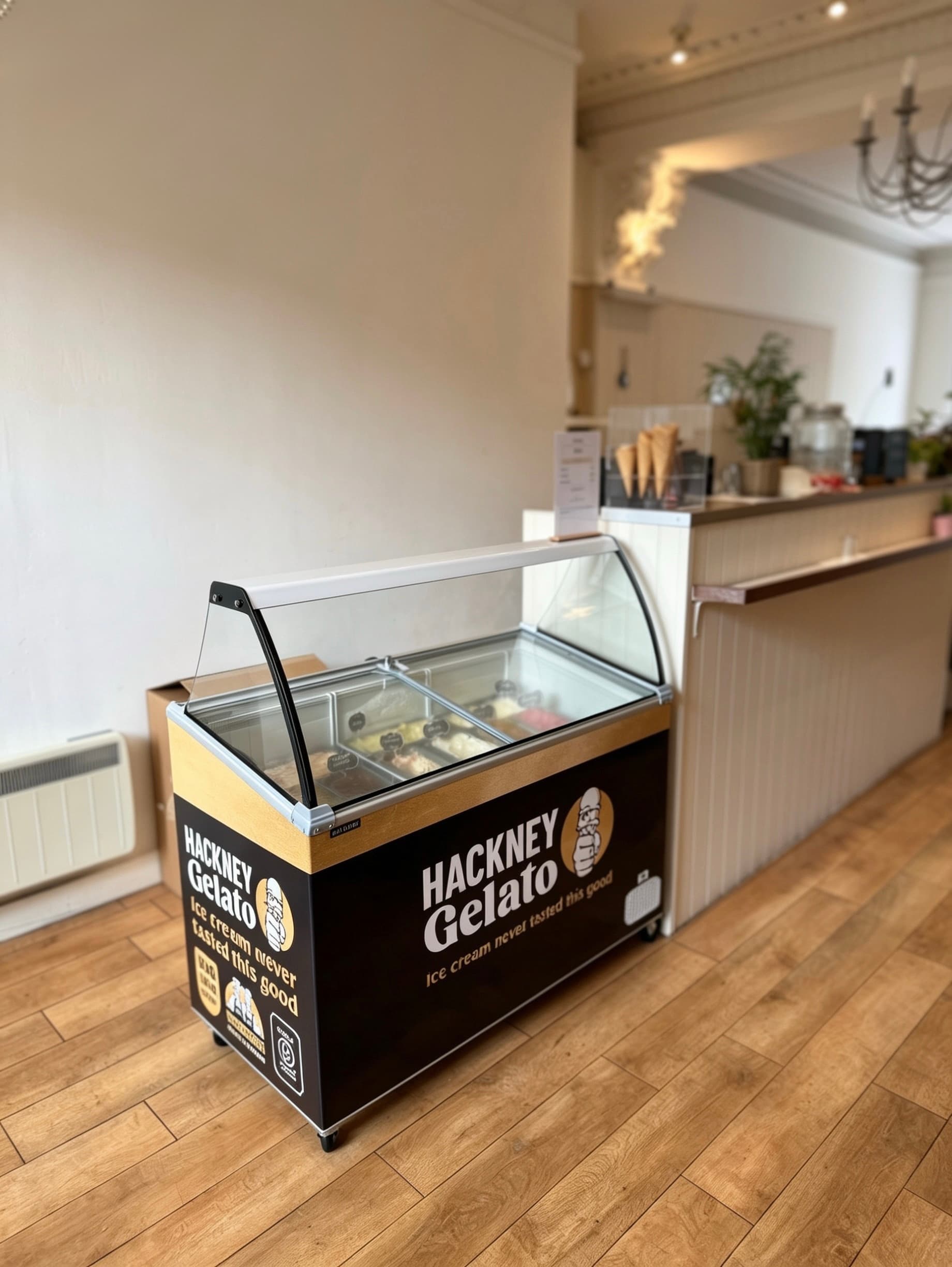
The gelato we serve is made by Hackney Gelato, founded by two Italian-born chefs who met at Michelin-starred Locanda Locatelli and trained with master gelatieri across southern Italy. It is still made in small batches in their East London kitchen using fresh milk, whole nuts and real fruit. They have taken 82 Great Taste stars in 8 years, which is a reasonable proxy for whether the approach works.
And where does sorbet fit in?
Sorbet, or sorbetto in Italian, is the third category and the simplest: fruit, sugar and water, with no dairy at all. That makes it naturally vegan and gives it a sharper, cleaner, more intensely fruity taste than a milk-based gelato of the same flavour.
The confusion usually comes from cabinets that sit sorbetto alongside gelato without labelling which is which. Ours carries both, and there is always at least one plant-based sorbetto in the nine, usually more. Ask whoever is on the counter what is on today.
Is gelato healthier than ice cream?
Broadly, a given weight of gelato tends to carry less fat than the same weight of ice cream, because of the milk-to-cream ratio. That is the honest extent of the claim.
Two things complicate it. Gelato is often a little higher in sugar, and because it is denser, a scoop of gelato weighs more than a visually similar scoop of ice cream. So comparing scoop for scoop rather than gram for gram narrows the gap considerably.
It is dessert either way. Order it because it tastes better, not because you are being virtuous about it.
How to spot good gelato in a cabinet
Look at the colour first. Real pistachio gelato is a muted, slightly grey-green, not the bright emerald that comes from colouring. Banana should be off-white, not yellow. Mint should be pale, not toothpaste.
Then look at the shape. Gelato piled into tall, sculpted mountains with decorative fruit stuck in the top is usually heavily stabilised, because a properly made gelato at the right temperature will not hold that shape. Flat trays with lids, stored out of the light, are a better sign than a theatrical display.
Finally, count the flavours. A cabinet running dozens of them either has enormous turnover or is storing product for a long time. We keep nine and rotate them, which is a deliberate choice: they turn over fast enough that nothing sits.
Trying it in Edinburgh
One scoop is £3.95, two is £5.95 and three is £7.45, each a generous 100ml minimum, in a waffle cone or a cup at no extra charge. Sauce is 50p, and a scoop on a Belgian waffle is £2.50.
If you only order one thing, make it the affogato at £5.50: vanilla Hackney Gelato with a shot of our Coban Guatemala espresso poured over it at the counter. Hot and cold, bitter and sweet, dessert and coffee in the same glass.
We are at 26 Morningside Rd, Edinburgh EH10 4DA, open every day 9am to 5pm, minutes from Bruntsfield, Marchmont and the Meadows.
Hungry now? We’re open every day, 9am–5pm.
26 Morningside Rd, Edinburgh EH10 4DA
More from the blog
20 May 2026 · 8 min read
Hackney Gelato in Edinburgh: 9 Flavours at Cafe Vera

3 June 2026 · 9 min read
Family Day Out in Morningside: Kid-Friendly Edinburgh
8 June 2026 · 7 min read
Why Sourdough Toasties Taste Better at Cafe Vera
3 August 2026 · 7 min read